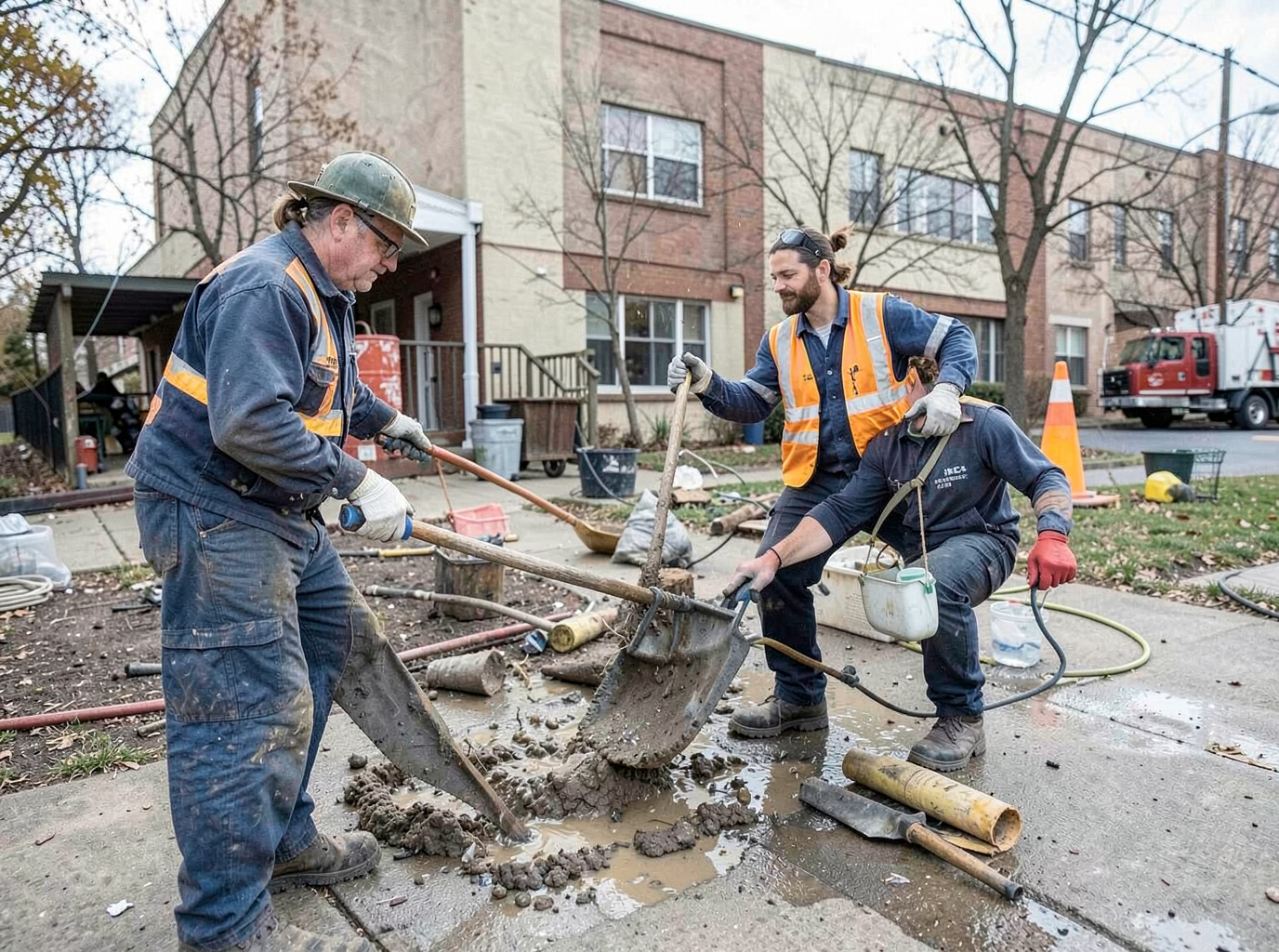
Hempstead's older housing stock in neighborhoods like the Clinton Street District and Hempstead Gardens often features plaster walls and crawl spaces that trap moisture after summer storms or winter pipe bursts. Extraction must reach behind baseboards and under hardwood floors common in pre-1960 homes near Hempstead Village Hall before humidity from the subtropical climate drives mold growth within 48 hours.
Cold winter temperatures in Nassau County can freeze residual water in slab foundations around Hofstra University properties, creating hidden ice pockets that expand and crack concrete. Technicians use moisture meters on concrete and subflooring to locate these pockets rather than relying on surface drying alone, which prevents callbacks when spring thaws arrive.
Nearby Uniondale and West Hempstead properties sit on slightly lower terrain that channels runoff toward basements during heavy rains. Cleanup crews set up containment barriers and negative air machines early to keep airborne particles from migrating into living spaces, especially in multi-unit buildings where shared walls speed cross-contamination.
Mackay Estate Gatehouse area homes with finished basements require careful removal of saturated insulation without disturbing original millwork. Drying plans account for the area's high summer humidity by running commercial dehumidifiers longer than inland jobs, targeting 45 percent relative humidity before reconstruction begins.
Technician insight
In Hempstead the thing that catches most people out with Water Damage Cleanup is older plaster and lathe walls in Clinton Street District homes that hold water far longer than drywall; winter freezes in Nassau County then push that moisture into adjacent rooms when the thaw hits, so we always pull baseboards early rather than waiting for visible signs.
Downtown Hempstead Basement After Pipe Burst
A cold snap froze supply lines in a 1920s home near Hempstead Village Hall, then thawed and flooded the finished basement. We found standing water under the subfloor and saturated insulation behind the stairwell. Extraction and targeted drying prevented mold spread into the first floor, allowing the owners to resume use within five days.
Water Damage Cleanup Services We Offer
✓Emergency Water Extraction
Rapid removal of standing water from basements and first floors in Downtown Hempstead using truck-mounted pumps to limit secondary damage to plaster and flooring.
✓Structural Drying and Dehumidification
Placement of commercial air movers and dehumidifiers in Hempstead Gardens homes to pull moisture from joists and subfloors after pipe failures or storms.
✓Hidden Moisture Detection
Thermal imaging and probe readings behind walls and under tile in Clinton Street District properties to locate trapped water missed by visual inspection alone.
✓Contents Drying and Cleaning
Salvage and drying of furniture, rugs and documents from Rockville Centre and Uniondale residences using climate-controlled chambers to reduce replacement costs.
✓Crawl Space Water Removal
Pumping and vapor barrier restoration in older West Hempstead crawl spaces where seasonal humidity accelerates wood rot after flooding events.
Water Damage Cleanup Cost in Hempstead, NY
| Service | Typical Range | What Affects It |
|---|---|---|
| Emergency Extraction | $350–$900 | Varies with water depth and access in older Hempstead basements |
| Full Structural Drying | $800–$2,200 | Depends on square footage and number of rooms in Nassau County homes |
| Hidden Moisture Inspection | $150–$350 | Thermal scan and probe readings for Clinton Street District properties |
| Crawl Space Cleanup | $600–$1,400 | Includes pumping and initial drying in West Hempstead homes |
Ranges are typical for Hempstead, NY and confirmed with an exact written quote before any work starts.
How it works
- 1
Arrival And Safety Assessment
Technicians arrive within hours, shut off water sources, and check electrical hazards in Hempstead properties before beginning extraction.
- 2
Water Removal
Standing water is pumped out using portable and truck-mounted equipment suited to Nassau County basements and slab homes.
- 3
Moisture Mapping
Infrared cameras and meters identify affected materials in walls, floors and ceilings throughout the structure.
- 4
Drying And Monitoring
Equipment runs with daily moisture readings until levels match unaffected areas, typically three to five days in local climate conditions.
- 5
Final Sanitation
Antimicrobial treatment is applied where needed and the site is cleared for reconstruction or insurance documentation.
Pricing
Upfront quotes after on-site inspection, with pricing driven by water volume, affected square footage and drying duration.