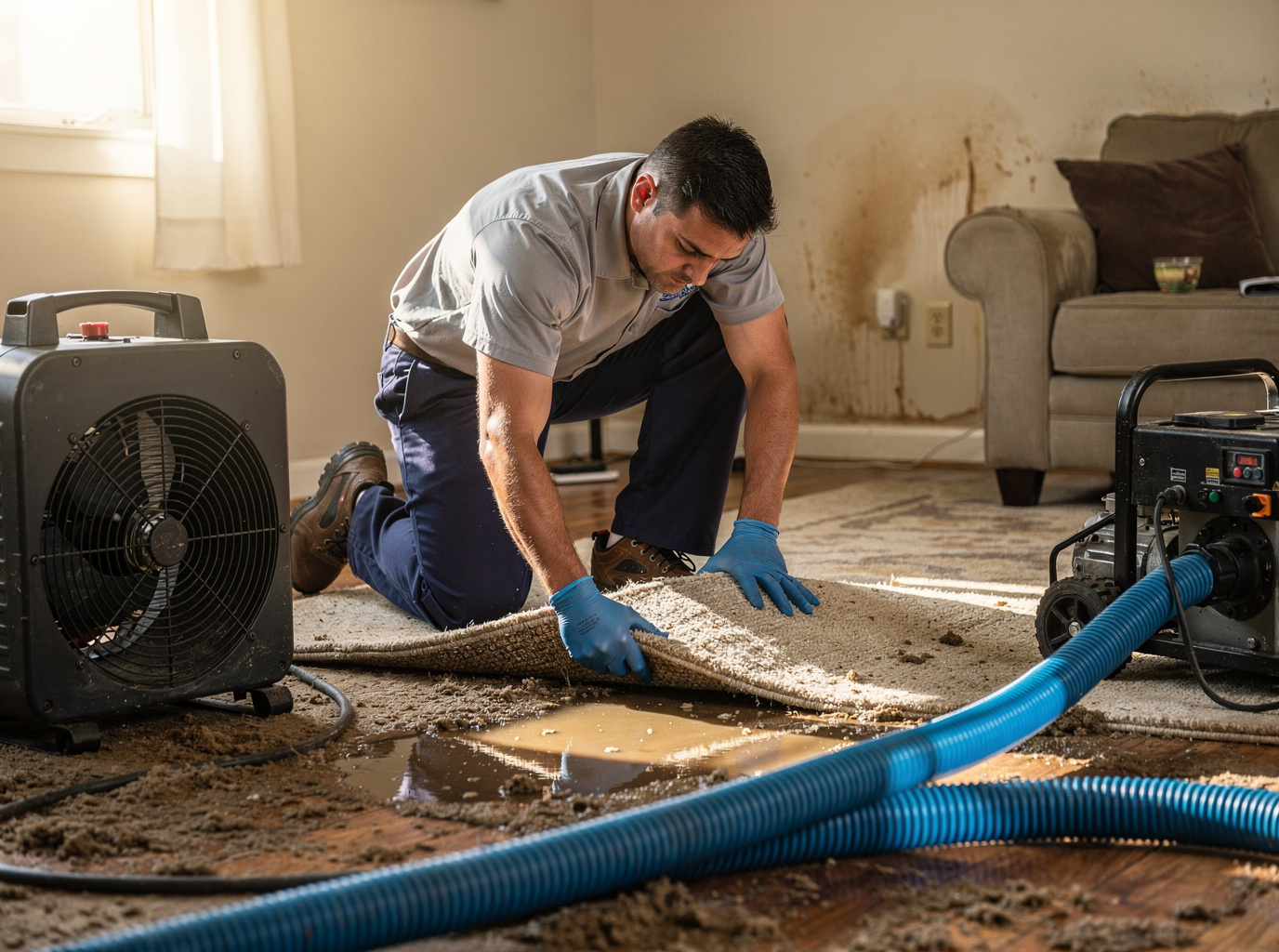
Hempstead's humid subtropical climate brings hot summers that speed mold growth after leaks and cold winters that freeze pipes in older homes. Properties around the Clinton Street District and Hempstead Village Hall often feature lath-and-plaster walls and balloon framing from the early 1900s. Moisture travels upward through these cavities far faster than in newer drywall construction, requiring targeted demolition rather than blanket removal to protect original woodwork.
Nassau County homes near Mackay Estate Gatehouse and Hofstra University sit on clay-heavy soils that hold groundwater longer after heavy rain. This creates repeated seepage into basements along streets like those in Hempstead Gardens. Technicians must account for seasonal shifts when placing drying equipment because summer humidity levels in the 70-80 percent range can double the time needed to reach safe moisture readings compared with drier fall conditions.
Nearby Uniondale and Rockville Centre share similar housing stock, yet Hempstead Turnpike properties often have finished lower levels added decades later without proper vapor barriers. Water from roof leaks at these additions pools against exterior walls and travels laterally into adjacent rooms. Restoration crews check for hidden saturation behind built-in cabinetry and under hardwood floors that were installed over the original pine subfloors common in the area.
Technician insight
In Hempstead, the thing that catches most people out with water damage restoration is how quickly moisture moves through the plaster-and-lath walls in homes built before 1940 around Hempstead Village Hall and the Clinton Street District. Summer humidity keeps those cavities wet long after the visible water is gone, so skipping extended drying almost always leads to mold callbacks later.
Winter Pipe Burst Near Hempstead Gardens
A homeowner in Hempstead Gardens discovered water seeping from a first-floor wall after a January freeze. Inspection showed the leak had traveled down through plaster cavities into the finished basement. Crews extracted water, placed drying equipment for six days to reach safe readings, then replaced only the saturated baseboards and subfloor sections while preserving the original hardwood above.
Water Damage Restoration Services We Offer
✓Basement Water Extraction
Removes standing water from Hempstead Gardens and Clinton Street District basements where clay soils slow natural drainage after storms.
✓Plaster Wall Drying
Uses targeted drying techniques on older lath-and-plaster walls found in homes near Hempstead Village Hall to prevent hidden mold without full demolition.
✓Pipe Burst Restoration
Addresses winter pipe failures common in uninsulated Nassau County homes, including water removal and selective repair of affected framing.
✓Flooring and Subfloor Repair
Restores hardwood and pine subfloors typical in Downtown Hempstead properties after leaks from above, replacing only saturated sections.
✓Attic and Ceiling Leak Repair
Handles roof and plumbing leaks that travel through ceilings in older Hempstead homes near Hofstra University before mold sets in.
✓Post-Storm Water Cleanup
Manages rainwater intrusion from summer thunderstorms that affect West Hempstead and Uniondale properties with finished lower levels.
Water Damage Restoration Cost in Hempstead, NY
| Service | Typical Range | What Affects It |
|---|---|---|
| Initial Assessment | Free | During listed business hours at 510 Hempstead Turnpike |
| Emergency Water Extraction | $400–$900 | Varies by volume and access in older basements |
| Full Structure Drying | $800–$2,200 | Depends on number of rooms and seasonal humidity |
| Plaster Wall Restoration | $600–$1,800 | Based on linear feet and extent of hidden damage |
| Subfloor Replacement | $500–$1,500 | Affected by floor type and square footage |
Ranges are typical for Hempstead, NY and confirmed with an exact written quote before any work starts.
How it works
- 1
On-Site Assessment
Technician inspects affected areas in the specific neighborhood, checks moisture levels in walls and floors, and identifies hidden paths water has traveled through older construction.
- 2
Water Removal
Industrial pumps and extractors pull standing water from basements and floors while protecting original plaster and woodwork common in Hempstead homes.
- 3
Drying And Dehumidification
Air movers and dehumidifiers run until moisture readings drop below safe thresholds, with equipment placement adjusted for the humid summer conditions typical in Nassau County.
- 4
Repairs And Restoration
Selective replacement of damaged materials followed by final drying verification and return of the space to pre-loss condition.
Pricing
Upfront written estimates provided after inspection; final cost depends on extent of hidden moisture and materials affected.